


Paws Post July 2025
Updated: Oct 24, 2025
Welcome to our third Paws Post of 2025!
WASHATHON 2025
Thank you to everyone who attended our 2025 Annual Charity Washathon at the beginning of July. We had an amazing time seeing all your lovely dogs and we hope you did too! It was a fun packed day of fresh smelling doggies, shopping and great food. Thanks to your help we managed to raise:
£488
We would also like to offer our thanks to the wonderful businesses that got involved on the day! If you were not able to attend please check them out here:

Breed Focus: Toy Poodle
For this months breed focus Lara has chosen the Toy Poodle and it really was a no-brainer considering her own little dog Wanda is a Toy Poodle! Poodles in general come in a range of sizes with the Toy being the smallest of the lot, weighing in at between 3-7.5 kg as standard!
These tiny dogs have the sweetest teddy-bear appearance. They are clever and loyal companions who can be very affectionate with their family! Their gorgeous curly coats require frequent daily brushing and professional grooming at least every 6-8 weeks to prevent matting and skin issues.
BREED STANDARD INFO:
SIZE: Small (3-7.5kg)
Exercise Needs: Medium-Low (up to 1 hour per day)
Traits: Confident, Loyal, Intelligent, Lively, Alert, Can be prone to anxiety if not properly socialised.
COAT TYPE: Medium/Long Hair - Wool/Curly Coat - Low/Non-Shedding
Lifespan: 12-15 Years
GOOD FOR FIRST TIME DOG OWNERS? Yes - if you feel you are prepared to deal with high levels of coat maintenance.
GROOMING NEEDS:: High - require daily brushing/coat maintenance
ACCEPTED COLOURS
The following colours are those accepted for showing by the British Kennel Club.
Black
Blue
Silver
Apricot
Cream
Red
Brown
White
Cafe Au Lait
Silver Beige
OTHER COLOURS:
The following colours are not currently accepted for showing by the British Kennel Club
Any non-solid colour (with markings)
Parti (black & white or brown & white)
Merle (a mix of shade of either brown or grey)
Phantom (black or brown body with tan/white points)
Agouti (a brown or grey body with bands of different shades)
Brindle (dark or light coloured stripes throughout coat)
Sable (paler body with dark points on ears and tail)
Tuxedo (solid with white markings on legs, belly and chest)
Ticking (small spots of colour on white areas of dogs)
Tips for Enjoying the Sunshine with your Dog!
Now the Summer holidays have finally began we have a few tips for enjoying the sunshine with your dogs!
Switch up your walk times!
Walks are a great part of your dogs daily routine, but when the warm weather hits it can be dangerous to take them out for their usual stroll! Not just the risk of heat stroke and the ambient temperatures but the temperatures of tarmac and paths can even burn their feet!
The best thing to do if the heat gets too much is to switch up your walk times to earlier in the mornings and later in the evenings when things are a bit cooler. Or if its easier you can skip the walk entirely in favour of some fun games inside like hide the treat, bob for carrots in a paddling pool or a frozen kong!
Use items designed specifically for keeping your dog(s) cool!
These days there are all sorts of different products aimed at helping you keep your dogs cool in the warmer weather, from cooling jackets to paddling pools and everything in between. You don't event have to spend a lot of money to find ways to keep your dogs cool! A wet towel over their backs, wetting their feet/under carriage with cool water or a frozen kong will do just as well!
Keep up with your dogs regular grooming appointments
This is important especially for dogs with thick undercoats like Collies, German shepherds and Husky's. Their coat is designed to keep them warm in cold temperatures and cool in hot temperatures but in order for it to keep them cool they need to upkeep a regular grooming schedule to remove any undercoat that can get stuck and prevent proper temperature regulation.
Equally, dogs with thick dense coats like poodle mixes may require grooming to prevent and remove matting, and keep their coats at a length that is suitable for the warmer weather. We would not advise going too short on dogs with pale skin during the summer months as this can expose their skin and cause them to become warmer and susceptible to sunburn. But its best to discuss with your groomer when you bring them in to find the optimum length for your dog!
Look out for the signs of heatstroke in your dog(s)!
Heatstroke is a potentially life threatening condition in which your dogs body temperature rises to dangerous levels. If you recognise the signs of heatstroke its important that you take your dogs to the vet without hesitation as heatstroke can lead to organ damage, seizures and even death.
What to look out for:
*please note that you dog does not have to have all of these symptoms to be suffering from heatstroke. If you are concerned or they show one or more symptoms it is always best to seek veterinary advise.
Excessive panting - dogs primarily cool themselves down through panting, heavy laboured panting is a good indicator of your dogs temperature.
Red gums - check your dogs mouth, their gums should be a healthy pink colour, excessive redness could indicate heightened temperature. Equally if your dogs gums are very pale or blue seek immediate veterinary assistance.
Drooling - excessive drooling or foaming at the mouth is a good indicator of heatstroke.
Vomiting/Diarrhoea - these symptoms alongside any of the other symptoms indicated could be signs of heatstroke.
Lethargy/Weakness - your dog may become sluggish, uncoordinated or collapse
Increase Heartrate - their heart will beat faster as they try to compensate for the heat
Confusion or Disorientation - they may seem confused, restless or have balance difficulties
Seizures - in severe cases, they may experience seizures
Increased Body Temperature - A dogs normal temperature is around 28.3-39.2 degrees centigrade. If it reaches 40, this is a serious emergency.
Grooming Focus: How to spot ticks and fleas
As the weather continues to stay warm we often see an increase in the appearance of nasty pests on our dogs! Fleas and ticks whilst being uncomfortable for yourself and your dog can also harbour a multitude of harmful diseases that can be passed on to not only your dog but to you as well! So this quarters grooming focus we've decided to focus on how to spot fleas and ticks and what to do when you think your dog has them!

Fleas:
Fleas are tiny insects that can live not only on your dogs, but on you and in your home. Once home is infected with fleas they can be difficult to get under control as they immediately begin breeding and laying eggs.
How to spot if your dog has fleas:
Excessive itching - flea bites are very itchy for both humans and dogs. If you notice your dog is itching more than usual then check them over!
Flea dirt on the skin - look out for flaky black pieces in your dogs fur especially around the lower back/tail area and around the groin.
Rash or bald patches - this is often only in the case of dogs with an allergy to fleas.
Lives fleas - these are small black bugs, but note that you may not see live fleas as they are difficult to spot and move quickly.
Why are fleas so bad?
They can cause anaemia in young or elderly dogs
They can transmit diseases
Their bites are very itchy and uncomfortable
Dogs who have allergies to fleas can end up with very sore and sometimes infected skin
How to get rid of fleas?
If you are concerned about fleas its best to speak to your vets as they will be able to provide you with the correct and most effective medication and treatment. Typically this consists of a flea shampoo or topical treatment, sprays for your house and to wash all your soft furnishings and bedding on a higher temperature to kill any remaining. As with all things, a preventative is better than a cure, which is why its important that you keep up to date on your dogs flea/worming prevention.
Ticks:
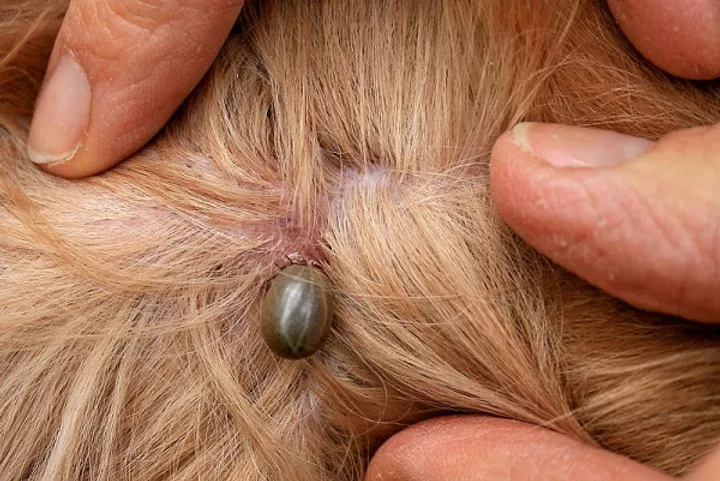
Ticks are small bugs that attach themselves to you or your dog and can transmit some serious diseases such as Lyme Disease.
How to spot a tick on your dog:
Ticks are small and often dark grey/brownish in colour so can be difficult to spot and often look similar to a skin tag. If you look closely you should be able to see their legs at the base of the body. They often attach to the legs, chest, or face of your dog. Unlike fleas, when ticks bite they secrete an anti-inflammatory substance that means your dog may not realise they are there. So they may not itch or try to remove the tick themselves.
What to do if your dog has a tick:
If you notice a tick on your dog the best thing to do is to point it out to your groomers or vets as soon as possible. They will be able to remove the tick safely. Its important that they get the base of the tick as often if they are removed at home they can leave a portion of the tick that may not be noticeable but can lead to infection. As with fleas your vets will be able to discuss medications to prevent ticks from attaching to your dogs. For yourselves, its best to make sure to keep your legs covered when walking in long grass or wooded areas.

BOOK IN YOUR SUMMER TRIMS SOON!
With the warmest months upon us - its best to book your dogs summer trims and grooms as soon as possible. This time of year is always busy for us and we want to ensure your dogs stay comfortable and cool in the warmer weather so be sure to book in asap if you haven't already. You can contact us via text/phone, email or via our website!


Comments